How to Import Chinese Fruits from China to Europe: Complete B2B Customs & Logistics Guide
Exporting premium fresh Chinese fruits—such as Shine Muscat grapes, fresh lychees, Asian pears, and honey pomelos—to the European Union (EU) represents a highly lucrative B2B opportunity. However, the EU enforces some of the strictest agricultural import regulations in the world.
To help international wholesale buyers and importers navigate this complex supply chain, we have compiled a comprehensive Q&A guide covering the most critical aspects of customs clearance, mandatory documentation, and professional cold-chain precautions.
Q: What preparations must be made before starting procurement?
A: First, the importer must obtain an EORI number and VAT registration. Secondly, the importer needs to register for an EU TRACES-NT (Trade Control and Expert System) account in advance. Before the cargo arrives at the port of entry, a declaration agent must enter the data and generate a CHED-PP (Common Health Entry Document for Plant Protection). Naturally, if you work with a reliable customs declaration agent, they will handle all of this for you.
Q: What are the essential customs clearance documents? (Inspection and Compliance)
A: To successfully clear EU customs without delays or cargo rejection, exporters must prepare a flawless set of specific trade and agricultural documents. The mandatory documents include:
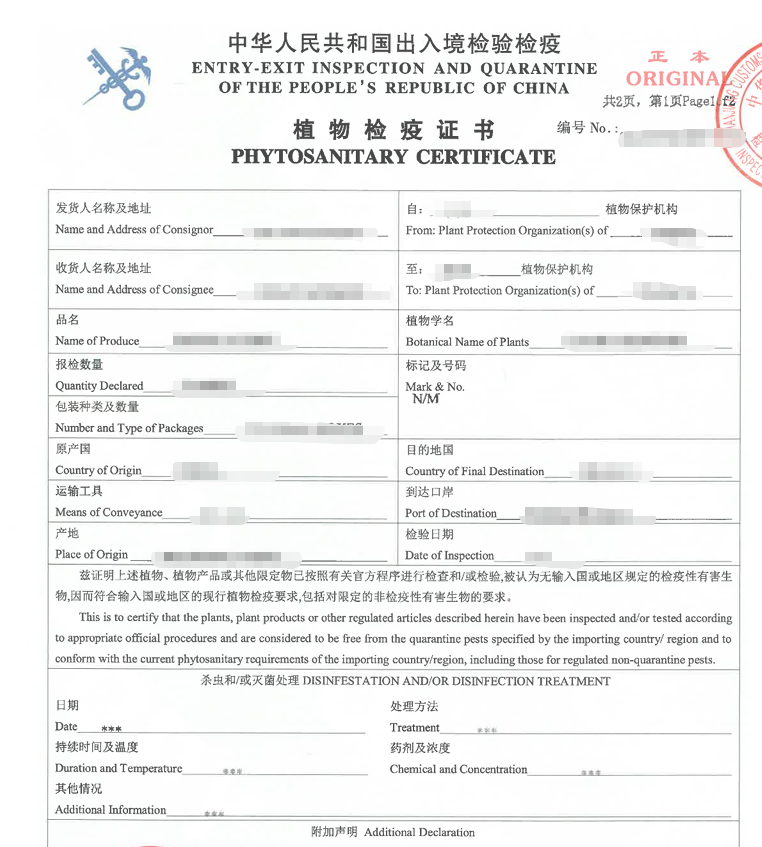
Phytosanitary Certificate: This is the single most important document for fresh produce entering the European market. Issued by official customs and agricultural authorities in China, it verifies that the fruits have been thoroughly inspected, strictly comply with the EU’s plant health regulations, and are completely free from regulated pests and diseases. Before placing an order, you must ensure your supplier can steadily provide this certificate. (You must double-check that the product name, quantity, and consignee information on the certificate are 100% accurate, as this determines whether the importer can smoothly pick up the goods. In the industry, the Phytosanitary Certificate usually travels alongside the goods, especially for time-sensitive air freight.)
Commercial Contract: This document serves as the legal foundation of your B2B transaction. It must clearly outline the agreed trade terms (Incoterms such as CIF or FOB), the currency of trade, the total commercial value, and detailed product specifications. (Similarly, verify the accuracy of all data. Additionally, since fruits are highly perishable, it is strongly recommended to require the supplier to include after-sales terms in the contract to guarantee compensation for potential spoilage.)
Packing List: European customs officials and receiving warehouses rely heavily on a highly detailed packing list. It must specify the exact breakdown of the shipment, including net and gross weights, carton dimensions, and internal packaging counts (e.g., specifying whether the fruits are packed in 4kg standard aviation cartons or larger 10kg boxes). The data on the packing list is provided by the supplier; you must urge them to verify all figures accurately, especially the quantities. (While theoretically the consignee on the packing list can differ from the buyer on the contract, this is generally not recommended in practice as it easily leads to mishandling by port staff.)
Bill of Lading (B/L) or Air Waybill (AWB): A logistics bill of lading must be included as a necessary customs clearance document, serving as the official contract of carriage
. The Bill of Lading (B/L) is used for sea freight, which is typical for sturdy fruits like pears and pomelos . Conversely, the Air Waybill (AWB) is used for air freight, which is essential for highly perishable fruits like lychees .
Q: What is the step-by-step customs clearance process for Chinese fruits?
A: The journey from a Chinese orchard to a European wholesale market involves a meticulously timed sequence of events to ensure maximum freshness:
Pre-Shipment Preparation: Immediately after harvest, the fruits must undergo rapid pre-cooling and preservation measures. (The pre-cooling time should ideally exceed 10 hours to ensure the core temperature reaches the optimal preservation level for that specific fruit. Communication with the supplier before procurement is essential here; their professionalism in preservation is vital.) The exporter then applies for the Phytosanitary Certificate through local Chinese customs and files the export declaration. For air freight orders, time is extremely tight; suppliers must precisely control the shipping schedule and certificate issuance time to ensure the Phytosanitary Certificate is in hand before the goods leave the facility.
International Transit: Highly perishable fruits are transported via air freight. (Pay special attention here: non-direct flights pose a higher risk, and you must ensure the fruits are stored in cold chain facilities at transit airports.) Sturdy fruits are transported via sea freight in 40ft reefer containers. The temperature and ventilation data of these reefer containers are crucial and must be set correctly.
EU Border Inspection: Upon arrival at the European port of entry, the cargo undergoes a strict documentary check. Next, EU plant health authorities conduct a physical Phytosanitary Inspection to verify that the physical cargo matches the Phytosanitary Certificate and is pest-free. Random sampling for pesticide residues (MRLs) may also occur. A prudent buyer should acquire sufficient knowledge about pesticide residues and communicate clearly with the supplier about the pesticides used before harvesting.
Q: How long does international shipping and customs clearance take?
A: The total timeline depends on the chosen logistics method and the accuracy of your paperwork.
Transit Timelines: Air freight (used for fragile, perishable items like lychees) typically takes 2 to 5 days to reach Europe. For direct flights, the actual flying time is the same as passenger planes. Sea freight (used for sturdy fruits like grapes, pears, and pomelos) usually takes 30 to 50 days. When the Red Sea was fully navigable, transit took about 30 days. However, since most ships now route around Africa, it can take 50 days or even up to two months.
Customs Clearance Timelines: If the Commercial Contract, Packing List, and Phytosanitary Certificate are completely accurate, and the physical inspection passes without issues, standard EU customs clearance typically takes 1 to 3 working days. However, if documentary errors are found, or if border control mandates laboratory testing for chemical residues, clearance can be delayed by 1 to 2 weeks, which is often fatal for perishable goods.
Q: What professional precautions and best practices must be taken?
A: Exporting to Europe requires more than just flawless paperwork; it demands a perfect physical supply chain. B2B exporters must implement several professional precautions to prevent cargo loss.
Firstly, strict temperature control (cold chain) is paramount because temperature fluctuations are the biggest enemy of fresh fruit. Specific fruits require highly tailored environments. For example, fresh lychees require a continuous 2°C to 5°C environment. Conversely, Chinese grapes and Asian pears require shipping in 40ft reefer containers strictly maintained between 0°C to 1°C with 90-95% relative humidity. Beyond this, the supplier's proprietary preservation packaging design and technology are vital. The cold chain is only the baseline; anti-bacterial, anti-fog, and anti-oxidation treatments are equally important.
Q: Are international shipping costs for fresh fruits high?
A: When buyers calculate costs, aside from various taxes and the price of the goods themselves, shipping costs are a major factor that cannot be ignored. For FOB terms, freight costs require special attention, particularly air freight. In most cases, the cost of air-shipping fresh fruits from China to Europe will be higher than the value of the fruit itself!
Therefore, the supplier's packaging design capability is critical. Different packaging designs lead to vast gaps in costs. An excellent packaging design is not just aesthetically pleasing; more importantly, it minimizes gross weight and volume while perfectly preserving the fruit's freshness.