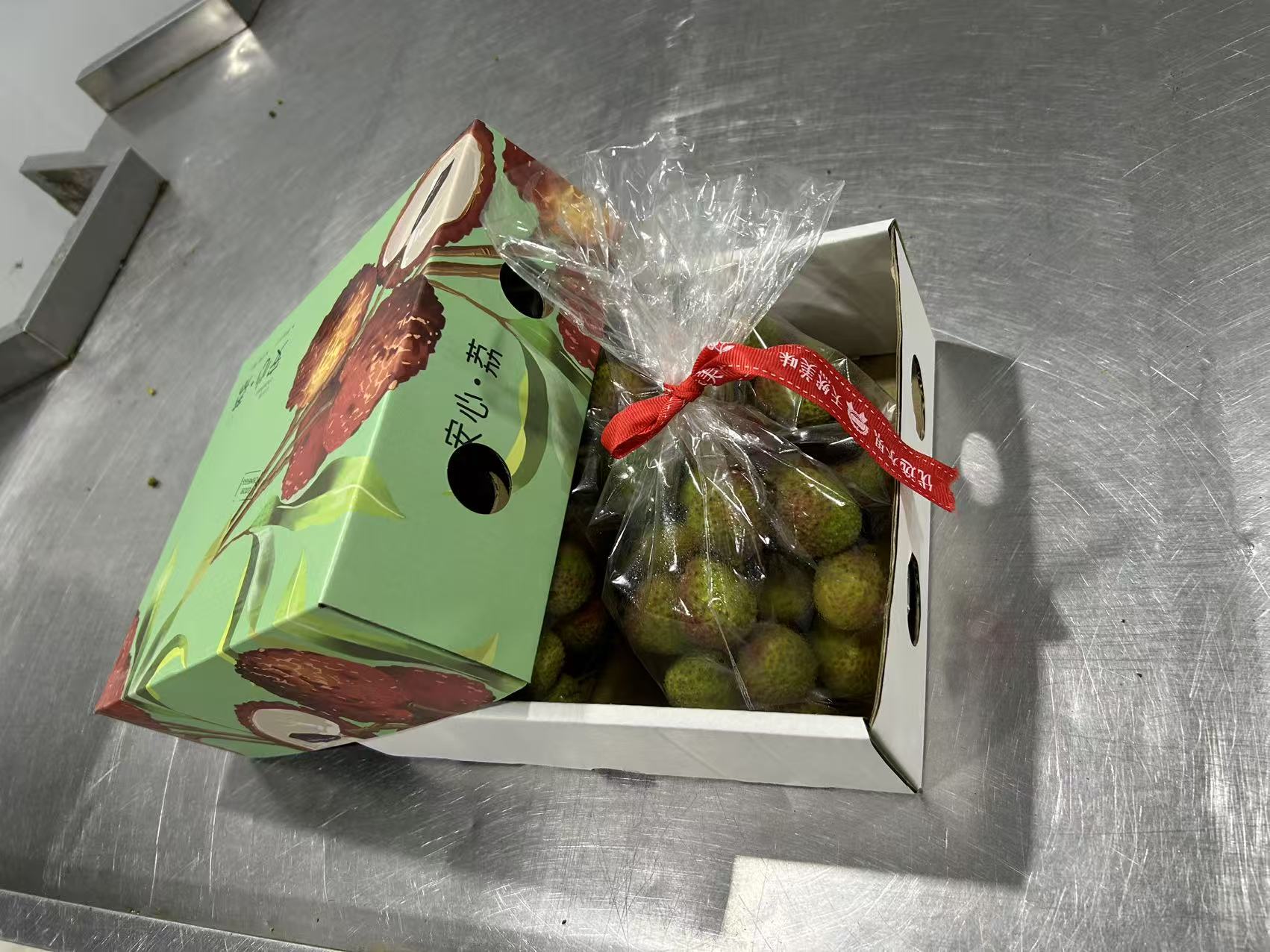
How to Source Small Consignment for Lychee EU Import
Anyone involved in importing fresh produce into the EU knows that lychees are a particularly tricky category. There's market demand and attractive profit margins, yet buyers hesitate to place large orders. A full container takes over 20 days by sea, and no one can be sure how the fruit will arrive in Europe—quality-wise, at least. As a result, more and more buyers are turning to small-batch air freight: sending just one or two tons first to test the waters, then scaling up if sales go well.
But here comes the immediate problem: who’s willing to take on such small orders?
If you approach major exporters in Maoming and mention an order of just one or two tons, they might not even bother giving you a quote. It’s not that they don’t want business—it’s simply that for such small volumes, the production scheduling, customs clearance, and coordination costs aren't worth it. Therefore, when sourcing small quantities of lychees, the key skill isn’t haggling—it’s finding suppliers who are open to working with small orders.
First, clarify: what exactly counts as “small”?
In the industry, “small batch” typically refers to orders between 1 and 5 tons. If you're only buying a few hundred kilograms, that’s considered a sample order, which follows a different set of rules. The 1-to-5-ton range is ideal for EU buyers—air freight remains cost-effective, the product can be sold within two to three weeks after arrival, and cash flow isn’t tied up for long. Take the 7-ton "Guanghua Xiang" shipment from Hainan in April 2025, distributed across seven countries with each receiving just one or two tons. Retail prices soared to €40–45 per kilogram—this is textbook small-batch strategy.
Where to find suppliers willing to accept small orders?
Since large-scale producers won’t touch small volumes, shift your focus downward.
First, early-season regions in Hainan. Lychees from Hainan hit the market around mid-April, about half a month earlier than those from Guangdong. This timing advantage is crucial for European markets, where local fruits haven’t yet arrived and Asian supermarket shelves are empty. Many medium-sized cooperatives and traders in Hainan are open to small orders because they’re also racing to capture the early-season window and aren’t picky about order size.
Second, medium-sized cooperatives in Maoming. While Maoming has vast lychee plantations and high yields, not all players focus solely on bulk exports. Some cooperatives specialize in trial export orders. Even if they can’t fill a full container, they have experience handling one or two tons via air freight. Crucially, look for those who’ve already exported to the EU—they’ll understand requirements like phytosanitary certificates and GlobalGAP compliance.
Third, local agents and trading intermediaries. If you lack direct access to orchards in China, working through reliable local agents can actually be more efficient. They often have multiple supplier networks and can help consolidate your order. The downside is the added middleman cost—but for small-batch buyers, the time saved on communication is far more valuable.
What should you focus on when negotiating with small-order suppliers?
Negotiating small-volume purchases requires a completely different approach than bulk deals. With large orders, price and payment terms dominate; with small ones, flexibility and cooperation matter most.
First, confirm the minimum order quantity. Ask directly what their smallest acceptable order is—don’t assume. Some suppliers say “we can handle anything,” but balk when you actually place an order. Eliminate these risks upfront.
Second, clarify packaging details. European supermarkets now favor smaller packs, usually 500 grams. Whether your 1-ton shipment arrives in large boxes or individual small packages directly affects shelf-ready efficiency. For small batches, it’s best to have suppliers pack according to your retail needs—avoiding post-arrival repackaging, which increases spoilage and eats into profits.
Third, keep payment terms flexible. Small orders mean lower total value, so suppliers usually resist offering credit terms. A practical solution is partial prepayment, with the balance due upon delivery and inspection. This protects both parties and encourages supplier cooperation.
Fourth, always include pesticide residue testing in the contract. No order is too small to skip this. The EU’s RASFF system isn’t joking about lychee alerts—Dutch authorities blocked a shipment in 2024, and Italy did the same in 2026, both due to excessive pesticide levels, resulting in complete destruction of the goods. As the EU importer, you are legally the first responsible party. Therefore, the contract must clearly state: provide a third-party pesticide residue test report for each batch before shipment; do not ship if the results fail; and agree in advance on who bears the testing costs.
For small-batch procurement, don't handle logistics alone.
Once you've found your goods, how do you get them to Europe? The easiest way for small quantities is to work with suppliers already exporting fresh produce to the EU and have them quote CIF prices. You hand over the goods to them—they manage air freight, cold chain logistics, and customs documentation—while you simply receive the goods at the EU end.
If you choose to use your own freight forwarder, closely monitor three key points: whether it's air cargo consolidation or full container load, who provides the temperature data loggers, and who will submit the CHED-PP declaration. Especially note that CHED-PP is an EU-mandated electronic entry document that must be pre-registered in the TRACES NT system. Small-volume buyers often stumble here—only upon arrival at the border do they realize a document is missing, and once the cold chain breaks, the lychees are ruined.
One final practical tip:
Small-batch lychee procurement is essentially about testing with manageable costs. You don’t need to invest all your capital at once, nor do you need to compete directly with large exporters. Finding a supplier willing to accept small orders, experienced in export procedures, and capable of controlling pesticide residues is more important than anything else. Start with one ton for your first order—once the process works smoothly, gradually increase volume. This is the most stable path for EU buyers importing lychees.