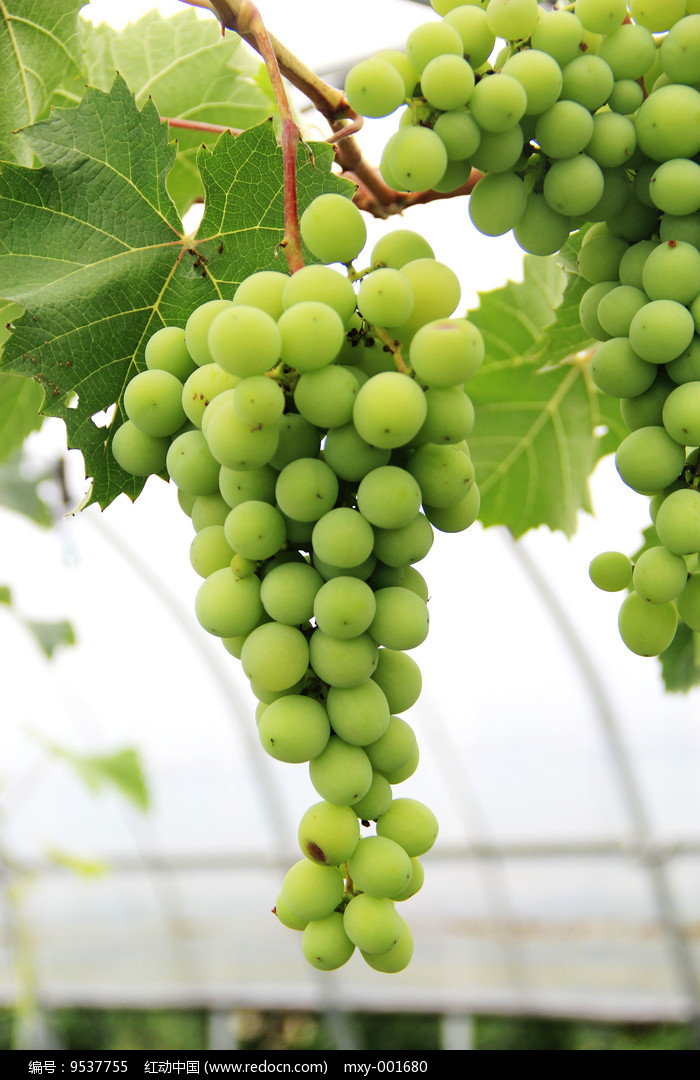
Importing Fresh Table Grapes from China to the EU: Five Practical Compliance Nodes for Cold Chain and Pesticide Residues
On 10 September 2026, a consignment of 30 cartons (150 kg) of Shine Muscat grapes from Cixi, Zhejiang was shipped from Ningbo to Belgium. Though small in volume, this marked the first export of Zhejiang fresh table grapes to the Belgian market. Before shipment, Cixi Customs carried out two core procedures: pre-emptive phytosanitary risk monitoring and verification that pesticide residues complied with EU MRLs. This successful shipment proves that Chinese fresh table grapes are technically eligible to enter the EU market.
Yet “being able to ship one consignment” and “sustained export volume” are two separate matters. China’s fresh table grape exports for the 2025/26 season are projected to rise by 16% to 770,000 tonnes, ranking China as the world’s largest exporter. EU arrivals alone hit 3,074 tonnes in January 2025. While EU market acceptance for Chinese grapes is growing, EU compliance requirements are tightening in parallel. Below we outline five pre-shipment verification points for EU buyers sourcing Chinese fresh table grapes: administrative export registration, pre-cooling windows, SO₂ handling, dynamic MRL updates and RASFF risk signals.
Export Eligibility: Export is not guaranteed by product availability
The first step for Chinese fresh table grapes bound for the EU takes place not at the port, but at the orchard and packhouse. Under the revised Measures for the Administration of Inspection and Quarantine of Exit Fruits, effective from 1 November 2026, orchards and packhouses for export fruits must complete China Customs registration, a mandatory prerequisite.
egistered orchard requirements include contiguous planting areas, no nearby pollution sources, trained staff for pest monitoring and control, established quality management systems, and no major phytosanitary outbreaks in the past two years. Packhouse criteria are more specific: raw material and finished goods storage suitable for fruit, physical separation between processing zones and living quarters, cleaning and disinfestation facilities meeting phytosanitary standards, plus process water and agrochemicals compliant with destination country requirements.
The revised rules extend registration validity from 3 years to 5 years, and shorten the renewal window from 3 months before expiry to 30 days before expiry. For buyers, this matters: a supplier holding valid registration demonstrates their orchard and packhouse have maintained ongoing Customs compliance audits. If a supplier cannot provide valid registration records, discussions around cold chain and residue controls become meaningless.
At the export inspection stage, Customs officers verify cargo-document consistency and conduct random box checks for pests, disease symptoms, foliage, soil and pest damage. Approved shipments generate electronic records for customs declaration. One critical caveat: once phytosanitary clearance is granted, the consignment must ship within the phytosanitary validity period. If vessel delays push shipment past this deadline, re-inspection is required and the original certificate cannot be reused. For suppliers facing port vessel delays, this validity window can trigger costly re-testing.
Pre-cooling window: Post-harvest hours determine maximum cargo quality
Table grapes are non-climacteric fruit; quality only declines after picking, never improves. Cold chain management exists solely to slow this deterioration. The cold chain starts not inside the reefer container, but at pre-cooling.
Industry export protocols require grapes to enter pre-cooling immediately after harvest. Standard operating procedures for export-grade Shine Muscat require fruit pulp temperature to reach 4–6°C within 1.5 hours of picking. Other guidelines specify forced-air or hydro cooling to bring pulp temperature down to 0–2°C within 24 hours, with a maximum permitted pre-cooling window of 48 hours. Export grapes from Liangshan, Sichuan follow stricter rules: fruit enters a 0°C pre-cooling warehouse within 2 hours of harvest, pulp temperature quickly drops to 4°C, and the entire transit maintains a constant 4°C, with IoT sensors transmitting temperature, humidity and vibration data every 30 seconds.
The underlying principle is consistent: delayed pre-cooling causes irreversible damage. If pulp temperature is not brought down to target within hours after harvest, berry softening, stem browning and moisture loss accumulate throughout refrigerated sea transport, and reefer containers cannot reverse quality degradation already incurred.
For EU buyers, contracts should specify tangible pulp temperature milestones rather than vague phrases such as “full cold chain”. Require suppliers to submit pulp temperature readings at pre-cooling completion, not merely ambient air readings from the cold store. Temperature probes must be inserted into berry flesh, not placed on the exterior of cartons.
SO₂ treatment: Cold chain aid, with labelling and consolidation implications
Slow-release sulphur dioxide (SO₂) pads are widely used for long ocean shipments of table grapes to suppress grey mould and stem browning. Technical documentation for Chinese export grape SO₂ preservation products states long-term monitoring shows SO₂ residues remain below 10 ppm, complying with EU Directive 95/2/EC on food additives.
The EU MRL for SO₂ in fresh table grapes is set at 10 mg/kg (total SO₂). This limit is generally manageable; typical industry detections sit around 3 mg/kg. Two secondary risks demand attention.
First, labelling compliance. EU legislation requires disclosure when peel receives fungicide, additive or preservative treatment. Where SO₂ is applied, packaging labels must comply with food additive regulations. Suppliers must truthfully declare SO₂ treatment within shipping documents.
Second, consolidation compatibility. SO₂-treated grapes continuously release sulphur dioxide gas, which bleaches and contaminates other fresh produce. If your procurement plan consolidates Chinese grapes with other commodities in one reefer container, SO₂ exposure means the consolidation plan needs full technical reassessment.
MRL compliance: Evolving residue limits
The EU pesticide residue regime is continuously updated. Importers of Chinese table grapes must track both currently enforceable MRLs and pending revisions.
Mepiquat: its MRL for grapes rose sharply from 0.02 mg/kg (at the limit of detection) to 5 mg/kg effective 6 July 2025, aligned with 2024 Codex standards. This major revision means samples previously rejected at 0.02 mg/kg are compliant under the new rule. For Chinese suppliers using mepiquat as a plant growth regulator, the updated MRL creates greater compliance headroom.
Dodine: in November 2025, EFSA document 2025.9757 proposed raising the dodine MRL for table and wine grapes from 0.01 mg/kg (LOD) to 2 mg/kg. This represents a large shift from near-zero tolerance, but the revision remains at EFSA opinion stage. Official publication in the EU Gazette is required before entry into force; the existing 0.01 mg/kg standard remains applicable for now.
Chlorpyrifos carries the highest risk. Chlorpyrifos is no longer renewed in the EU, with a default MRL of 0.01 mg/kg for table grapes. RASFF continues to publish alerts on Chinese dried grapes containing chlorpyrifos. On 22 April 2025, the Netherlands notified non-compliant Chinese dried grapes with chlorpyrifos detection; on 17 November 2025, another Dutch alert recorded 0.029 mg/kg chlorpyrifos in Chinese dried grapes. While these notifications apply to dried grapes rather than fresh table grapes, the historical use of chlorpyrifos in Chinese grape cultivation creates residual risk for fresh fruit. If your supplier’s growing region has past chlorpyrifos usage, requesting targeted test reports for this active substance is reasonable.
Under the EU’s 2027–2029 pesticide residue monitoring plan, fresh table grapes are designated as a priority sampling commodity in 2027, with targeted testing for substances including 2,4-D. Starting in 2027, shipments of Chinese grapes to the EU will face higher border inspection frequency and expanded analyte lists. Investing in MRL compliance today prepares for stricter future enforcement.
RASFF signals: Risk linkage between dried grapes and fresh table grapes
Current RASFF notifications for Chinese grape products mostly relate to dried grapes, with relatively few direct alerts for fresh table grapes. However, dried grapes and fresh table grapes often share growing regions, pesticide application practices and farm management systems. Repeated chlorpyrifos detections in dried grapes indicate that some Chinese grape growing areas still deploy active substances banned in the EU.
In 2025, RASFF issued 10,490 alerts, up 11% year-on-year. Fruit and vegetable notifications accounted for 18% of total alerts, with pesticide residues the dominant hazard category, and 78% of non-compliant products originating outside the EU. Chinese fruit and vegetable products have received repeated RASFF alerts for residues. This is not a China-specific penalty, but a systemic signal: EU screening of imported produce is intensifying, and Chinese grape products fall within this enhanced scrutiny.
Pre-shipment verification checklist for EU buyers sourcing next-season Chinese table grapes
Registration validation. Request the orchard and packhouse Customs registration numbers plus expiry dates, confirming validity at export time. For newly registered facilities established after the 1 November 2026 rule change, confirm whether registration falls under the old or new framework, as validity and renewal rules differ.
Pre-cooling and temperature records. Require suppliers to submit pulp temperature readings at pre-cooling completion and the full temperature profile from harvest to container loading. Contractually define target pulp temperature (typically 0–4°C) and acceptable fluctuation bands.
SO₂ treatment declaration. Ask suppliers to state in shipping documents whether SO₂ slow-release pads are used. If applied, verify packaging labels include required EU food additive declarations and re-evaluate consolidation feasibility.
Targeted MRL testing. Request chlorpyrifos test reports with limits below 0.01 mg/kg. For dodine, follow the MRL in force at shipment. For mepiquat, verify that plant growth regulator residues fall within the updated 5 mg/kg MRL.
Pre-loading third-party sampling. Arrange third-party laboratory multi-residue screening on representative samples before container loading, covering all grape-related active substances listed in the EU coordinated monitoring programme. Test results should form part of the shipping documentation.
Chinese fresh table grapes are relatively new to the EU market, and that first small 150 kg shipment to Belgium demonstrates the access route. Yet China is already the world’s largest table grape exporter at 770,000 tonnes per season. At this scale, EU buyers should no longer ask whether Chinese grapes can enter Europe. The critical question is whether each shipment has verifiable cold chain and residue compliance records. That 150 kg pilot proved market access; safe bulk procurement depends on traceable documentation and temperature data validated at every pre-shipment node.