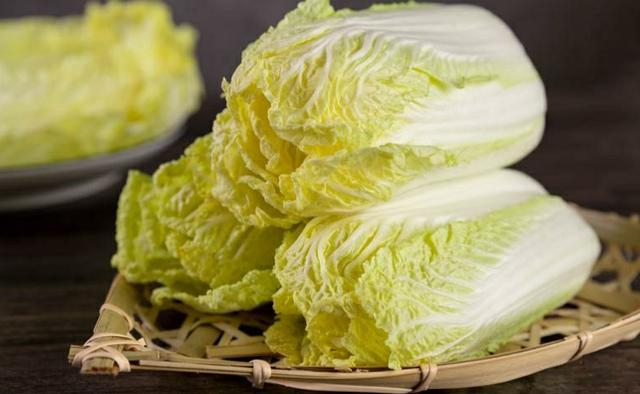
Logistics planning checklist for EU import of baby chinese cabbage
When you take a cabinet of Chinese cabbage at a wholesale market in Rotterdam or Hamburg, you are faced with far more than just "signing for delivery". As an EU importer, you bear the legal responsibility of a food operator-once the goods enter the EU market, the ultimate responsible person for safety and compliance is the buyer, not the Chinese exporter. Your provider can cooperate with providing documentation, but the legal responsibility is always on your shoulders. The following is a list of logistics planning that buyers can directly implement from the five dimensions of cost, contract, document, compliance, and acceptance.
1. See your true cost structure first
You need to know that EU imported food costs far more than FOB prices before negotiating prices. Taking Germany as an example, the import tax is calculated based on the CIF value, that is, the value of the goods plus freight plus insurance. The standard value-added tax rate is 19%, and most commercial imports are levied accordingly. While some foods may enjoy preferential tax rates, vegetable categories usually apply the standard tax rate, and this figure must be incorporated into your cost model.
More critical is the cost of loss. In the cold chain logistics of fresh vegetables, if the pre-cooling at the place of origin is not in place or the temperature fluctuates during the transportation process, the loss rate of leafy vegetables may reach 8% to 12%. This means that you pay 100% of the price and shipping, but the actual saleable goods may only be. It is far more realistic to calculate this part of the loss into the procurement cost in advance than to pursue accountability afterwards.
Industry data also confirms this point. The average loss rate of domestic fruit and vegetable postharvest circulation is between 20% and 30%, while the loss rate of fresh fruit transportation that has not realized the whole process of cold chain monitoring is as high as 30%, of which the average loss of leafy vegetables accounts for as high as 17.9%, ranking first among all categories. in the forefront. The transportation loss rate of vegetables after pre-cooling treatment can be reduced to 8% to 10%, while the whole cold chain can control the loss between 1.5% and 3%. Although the comprehensive cost of the cold chain is 30% to 50% higher than that of normal temperature, the cost advantage brought by the extremely low loss rate is enough to cover this difference.
2. Contract negotiation stage: Incoterms decides who takes what risk
Many buyers are used to negotiating shipping terms last, but Incoterms determines the nodes of temperature liability, insurance liability and risk transfer. The following three common terms, the buyer's risk exposure is completely different.
First, FOB Qingdao or Shanghai. This means that you bear all risks after shipment, including runaway sea temperature. You need to be confident enough about the performance of the shipping company or freight forwarder's refrigerator.
Second, CIF Rotterdam. This means that the seller is responsible for freight and insurance, but the coverage of insurance may not be sufficient to cover the quality degradation of fresh food due to temperature fluctuations. Most marine insurance does not cover natural deterioration.
Third, DAP or DDP. This means that the seller bears more transportation responsibility, but the price is usually higher, and you are still responsible for customs clearance and inspection after arrival.
It is recommended to clarify three things in the contract: who provides the temperature recorder, who owns the data, and the claim mechanism after the temperature exceeds the standard. Don't accept the verbal promise that "we have been shipping like this is fine".
3. Documents that must be obtained before delivery
The EU has a clear official control framework for the import of plant products, and importers are required to submit CHED-PP, or Common Health Entry Document, in the TRACES NT system. This is mandatory electronic pre-declaration, and without CHED-PP, goods cannot pass border checks.
The core files you need include the following. Phytosanitary certificate, issued by the official agency of the exporting country, certifying that the product is free of pests. Commercial and packing list for customs declaration basis. Certificate of Origin, which is used as the basis for preferential tariffs. Pesticide residue testing reports, proving compliance with EU MRL standards, need to be issued by a third-party laboratory.
According to the EU's revised implementation regulations in 2025, the identity check for some Chinese vegetables is 5%, but this is only the basis. If origin risk escalates or your compliance record is poor, the inspection rate will increase significantly.
4. MRL Compliance: The Biggest Hidden Risk for Buyers
This is the technical barrier that EU buyers need to pay most attention to. There are significant differences between the EU pesticide residue standard and the Chinese national standard. The EU has far more pesticide residues for specific foods than the Chinese standard, and the value of the same pesticide in different vegetable categories is more detailed. This means that a cabbage that meets the national standard in China may be notified by RASFF in the EU because a certain pesticide exceeds the standard.
The MRL change worth noting is that the European Union has raised the concentration of fluriacetamide in leafy vegetables such as Brassica, including Chinese cabbage, from 0.03 mg/kg to 0.5 mg/kg, which will be applicable from May 2024. If your supplier has used this pesticide, this is a compliance pressure, but do not relax the testing of other pesticides.
The real case of RASFF is worthy of vigilance. On March 31, 2026, Greece notified that China's export of green peppers was unqualified, and procymidone 0.037 mg/kg and furteworm 0.066 mg/kg were detected, while the maximum residues of these two pesticides were 0.01 mg/kg, and the products have not yet been released. The market has been destroyed. On March 19, 2026, Norway notified that the vegetables exported to China were unqualified, and 0.11 mg/kg of furteproximide and 0.13 mg/kg of azotemoxamide were detected, exceeding the standard, and the products were destroyed. On May 15, 2025, the Netherlands notified that the beans exported to China were unqualified and the pesticide content exceeded the standard. The core warning of these cases is that the EU's law enforcement on pesticide residues is highly random. Once the random inspection finds that the goods exceed the standard, the goods will not be returned or rectified, but will be directly destroyed, and all logistics costs, production costs, and tariff costs will all return to zero.
The actual operation suggestion of the buyer is to require the supplier to provide the third-party pesticide residue test report corresponding to the batch before delivery, and the test items cover key pesticides of concern to the EU. Don't accept the "factory has ISO certification so no problem" statement, ISO does not cover MRL compliance for specific products.
5. Cold Chain Acceptance: Three Things Must Be Checked on Arrival
When a refrigerated container arrives at your warehouse, don't sign for it just by looking at its appearance. The following three checks must be performed one by one.
First, temperature data is required. Refrigerated containers have their own temperature recording function, which requires freight forwarders to provide records of gas supply temperature and return temperature throughout sea transportation. The return temperature should be stable between 0 °C and 2 °C. If the temperature record shows multiple abnormal increases, the actual quality of the shipment is likely to have been compromised.
Second, check the stacking in the box. The carton should not be on the container wall, and a space of 5 to 10 centimeters should be reserved between the top of the cargo and the top of the box to ensure the circulation of cold air. If the stacking blocks the floor ventilation slot, the temperature in the box will be stratified, and the cargo near the box door may have heated up.
Third, sample temperature measurement. Use a probe thermometer at the cabbage center of the carton in the middle of the box to confirm that the center temperature of the cargo is below 2 °C. If the center temperature is higher than this value, the shelf life has been shortened even if the appearance seems okay.
6. your compliance bottom line
As an EU importer, you need to be clear: the EU phytosanitary and food safety system does not lend itself to the fact that you are a buyer. CHED-PP is your declaration obligation, phytosanitary certificate is your verification obligation, and MRL compliance is your legal responsibility. Suppliers can assist, but not substitute. Turn the above list into an enforceable clause in the procurement contract, and turn the claim after the event into confirmation before delivery, so that you can make a profit in this category with high loss and high threshold.