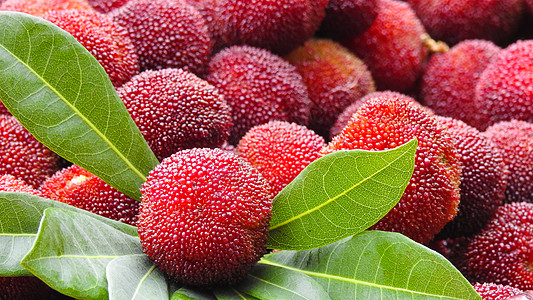
Sourcing Chinese Fresh Waxberry: Practical Tips for EU Importers
Fresh Chinese waxberry can reach a retail price of €3‑4 per piece for medium‑large fruits over 25 g, with premium varieties commanding even higher prices. This price level is sufficient to cover air‑freight cold‑chain costs. Nevertheless, waxberry ranks among the highest‑risk fresh‑produce categories: extremely short shelf‑life, high pesticide‑residue hazards, and uncertain phytosanitary market‑access requirements together place heavy demands on EU importer supply‑chain management.
This article evaluates key sourcing considerations across four dimensions: market access, MRL compliance, cold‑chain logistics, and commercial positioning.
Barrier 1: Export Registration And EU Market Access
Quality is not the first challenge for waxberry shipments to the EU; market‑access clearance is. Before assessing other factors, verify two critical points: whether the supplier’s growing region falls within China Customs registered outbound‑fruit orchards and packing‑house scope, and whether phytosanitary certificates can be smoothly issued for this commodity.
China Customs enforces registration requirements for waxberry orchards and packing facilities exporting overseas. Orchard registration prerequisites include: minimum contiguous planting area of 100 mu (≈6.67 hectares), absence of surrounding pollution sources, dedicated plant‑protection officers for pest monitoring and control, a full quality‑management system covering organisation, staff training, pest surveillance, agrochemical administration and GAP implementation, plus no major plant‑disease outbreaks in the past two years.
Packing‑house requirements are more detailed: raw‑material and finished‑goods warehouses meeting waxberry storage specifications, physical segregation between processing zones and residential areas, quarantine‑compliant washing, processing and disinfestation infrastructure, processing water and agrochemicals complying with importing‑country standards, end‑to‑end quality‑management systems covering receiving, processing, packing, storage and transport, and complete traceability records for fruit lots, pest‑control measures and hazardous‑substance testing. Registration certificates remain valid for three years.
For export clearance, waxberry consignments undergo official inspection and quarantine at customs offices local to the packing house. Satisfactory assessment generates electronic accounting records for customs declaration. Waxberry cannot be exported without passing mandatory inspection‑and‑quarantine procedures.
Real‑world export cases prove EU‑bound shipments are feasible. In June 2025, Dongkui waxberries from Wencheng, Zhejiang arrived by air freight in Frankfurt, Germany. During the same period, over 6 tonnes of waxberries were shipped from Hangzhou to Rotterdam, the Netherlands. Wencheng waxberries have previously been exported to the UAE, Cambodia, Italy and Spain. While viable access routes exist, access conditions must be checked batch‑by‑batch per growing region.
Particular attention should be paid to its extremely short shelf‑life; air‑freight costs can nearly exceed the fruit’s intrinsic value. Commercial viability therefore heavily depends on end‑market price acceptance, which in turn relies on arrival quality determined by precise cold‑chain and compliance execution.
Barrier 2: MRL Compliance — Evidence from RASFF Notifications
Pesticide‑residue non‑compliance risks for waxberry are well‑documented within the EU RASFF database.
On 1 July 2025, Belgium issued RASFF notification reference 2025.4968 for Chinese waxberry with excessive pesticide residues, classified as a warning alert. Non‑compliant consignments had already been distributed into Germany.
Detected residue levels versus corresponding EU MRL values are listed below: ‑ Cypermethrin: 0.21 mg/kg (EU MRL 0.05 mg/kg, 4.2 × exceedance) ‑ Pyriproxyfen: 0.24 mg/kg (EU MRL 0.1 mg/kg, 2.4 × exceedance) ‑ 4‑CPA: 0.20 mg/kg (EU default MRL 0.01 mg/kg, 20 × exceedance) ‑ Prochloraz: 0.90 mg/kg (EU MRL 0.03 mg/kg, 30 × exceedance) ‑ Difenoconazole: 0.22 mg/kg (EU MRL 0.1 mg/kg, 2.2 × exceedance)
Five separate active substances were violated within a single shipment. 4‑CPA is a plant‑growth regulator not authorised for use within the EU, triggering the 0.01 mg/kg default MRL. Prochloraz showed the most severe breach at 30‑times the permitted limit.
Special note regarding EU MRL classification: waxberry (Myrica rubra) falls under the group “bayberries, red” within “other small fruits and berries”, meaning it shares identical MRL settings with mulberries. Academic surveys report high detection rates for prochloraz (71.6 %) and carbendazim (68.9 %), two substances repeatedly responsible for RASFF border rejections. Waxberry has no protective peel; its porous surface directly absorbs agrochemicals, and washing delivers limited residue reduction. Rigorous field‑stage pesticide management represents the only reliable compliance measure.
Chlorpyrifos presents another notable hazard. Research demonstrates slow degradation on waxberry fruit: residue levels still measure 0.073‑0.13 mg/kg 44 days post‑application, against the EU MRL of 0.05 mg/kg applied to mulberries and blueberries. Targeted chlorpyrifos testing should be included as a standard item within pre‑shipment inspection protocols for waxberry orders.
Barrier 3: Cold‑Chain Logistics — 48‑Hour Window Is Operational Requirement, Not Marketing Slogan
Waxberry cold‑chain principles differ fundamentally from most fresh produce. Whereas typical cold‑chain goals merely slow quality decay, waxberry logistics must lock in near‑harvest quality within an extremely narrow time frame.
Public export cases supply concrete operational benchmarks. For Wencheng waxberry exported to Germany: fruit is loaded onto refrigerated trucks at 06:00 hrs, maintained at 5‑10 °C for an approximate 8‑hour journey to Shanghai Pudong Airport, then flown intercontinentally to Frankfurt. Total elapsed time from harvest to airport arrival stays under 48 hours. Nitrogen‑flushed packaging displaces oxygen inside packs to suppress oxidation and spoilage, extending shelf‑life up to 10 days under refrigerated conditions.
Another emerging technical approach is hypobaric (low‑pressure) storage. Traditional industrial‑scale hypobaric storage suffers two major constraints: limited throughput and excessive water‑weight loss for peel‑free soft waxberry fruit. Chinese research teams have developed high‑frequency‑vibration‑assisted hypobaric storage, applying mechanical vibration under reduced atmospheric pressure to activate plant defence responses, preserving fruit quality and extending post‑harvest life. While representing promising innovation for waxberry post‑harvest handling, real‑world export adoption remains limited today.
Key cold‑chain parameters to specify in purchasing contracts:
Pre‑cooling time window. Sorting, grading, packing and pre‑cooling must happen immediately after harvest. Nitrogen flushing should be performed post‑pre‑cooling and prior to container loading. Industry best practice mandates rapid post‑harvest sorting, packing, pre‑cooling and cold‑chain dispatch.
End‑to‑end temperature logging. Waxberry cold‑chain workflows require multiple set‑points rather than one fixed temperature. Short‑haul truck transport from field‑side to airport runs 5‑10 °C; in‑flight carriage temperatures must be confirmed with your airline carrier. Require full temperature traceability covering harvest through final delivery, not merely nominal equipment setting values.
Packaging integrity. Nitrogen‑modified‑atmosphere performance fully depends on intact packaging. Any rupture causes nitrogen escape and accelerated oxidative deterioration. Pre‑shipment inspection shall include seal‑integrity verification for nitrogen‑flushed packs.
Barrier 4: Commercial Positioning & Pricing Logic
Clarify waxberry market positioning for Europe at project inception. Market data shows Wencheng waxberry yields roughly 40 fruits per kilogram at domestic pricing around CNY 180 (≈USD 25.1/kg). In European and North‑American markets, single‑unit value may exceed CNY 10 (≈USD 1.40); retail prices for >25 g premium fruits reach €3‑4 apiece.
This price bracket restricts target channels in Europe to high‑end Asian restaurants, premium delis and specialist Asian‑food retailers, rather than mass‑market supermarkets. High retail willingness‑to‑pay tolerates expensive air freight yet demands strict consistent quality. Consumers rapidly reject €3‑per‑unit waxberry showing softening, juice leakage or dull discolouration. Even with nitrogen packaging plus refrigeration, maximum shelf‑life equals 10 days. If elapsed time from picking to retail shelf exceeds seven days, the viable sales window shrinks drastically.
This creates a commercial paradox: high unit prices can absorb air‑freight expenses, yet logistical timing constraints remain extremely unforgiving. 48‑hour door‑to‑door delivery has been achieved in select export trials but demands seamless coordination linking supplier, freight‑forwarder and airline. Any disruption — flight cancellation, customs hold, operational error — shortens remaining shelf‑life below commercially viable thresholds.
Sourcing Verification Checklist
Market‑access confirmation Confirm orchard and packing‑house hold valid 3‑year‑valid outbound‑fruit customs‑registration. Request copies of recent EU‑destination phytosanitary certificates verifying product description and origin consistency.
MRL‑targeted laboratory testing Require lab reports specifically covering 4‑CPA, prochloraz, carbendazim, cypermethrin, difenoconazole and chlorpyrifos. Test limits must sit below corresponding EU MRL values; 4‑CPA detection limit shall reach 0.01 mg/kg or lower. Set testing standards referencing exceedance data from RASFF alert 2025.4968.
Cold‑chain documentation Obtain complete temperature trace curves spanning harvest through final delivery, including 5‑10 °C truck‑transit readings, fruit‑core temperature upon completing pre‑cooling, and in‑air‑cargo temperature records.
Nitrogen‑packaging validation Ask suppliers to submit seal‑integrity test records for nitrogen‑flushed packs. Add physical packaging inspection during pre‑shipment visits.
Commercial‑feasibility assessment Evaluate target‑market price acceptance and channel fit before finalising supplier compliance reviews. European end‑consumer pricing of €3‑4 per fruit means procurement and logistics costs must align with this premium price segment.
Waxberry represents a technically challenging commodity for both Chinese suppliers and EU importers. Access pathways exist yet remain narrow; RASFF records confirm tangible MRL hazards; cold‑chain timelines are measured in hours rather than days. EU buyers entering this category require thorough preparation of supplier compliance capabilities alongside robust sales‑channel readiness. Initial shipment volumes do not need to be large, yet full documentation covering compliance certificates, temperature logs and lab results must be maintained for every batch. Once quality failure occurs, its short shelf‑life leaves no time for replacement consignments to remedy commercial losses.