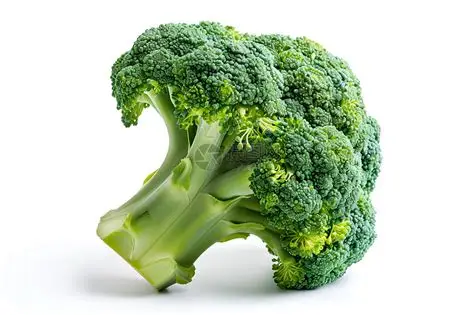
Import Broccoli from China: Three Things EU Buyers Check
Three Key Factors EU Buyers Should Consider When Importing Broccoli from China
The broccoli supply in the European market has a structural characteristic: during winter and spring, production in Southern Europe declines, yet consumption does not slow down. This time gap creates a window of opportunity for Chinese broccoli to enter the EU's procurement list.
According to IndexBox data, European cauliflower and broccoli consumption rebounded to 2.1 million tons in 2024, with imports increasing by 16%. Spain remains Europe’s largest producer and exporter, accounting for 56% of total exports, but its shipments are concentrated in autumn and winter. As the transition period between winter and spring arrives, a supply gap emerges. During the 2025/2026 season, persistent rainfall delayed planting in Murcia, Spain, leading to a noticeable shortage of broccoli and cauliflower across the European market and sustained price increases.
This gap presents an opportunity for Chinese broccoli. However, broccoli lacks thick skin protection and continues to respire after harvest—each degree increase in temperature accelerates aging. Importing broccoli is essentially a race against time.
1. Winter-Spring Window: China’s Broccoli Harvest Is Not Linear
China’s broccoli production spans multiple seasons. Yunnan province leads winter production, supplying from May to November. The large diurnal temperature variation at high altitudes helps prevent flower heads from opening prematurely, making this the most consistent quality season throughout the year. Gansu takes over in summer, supplying from July to October, offering tender stems and finer florets. Shandong provides supplementary supplies between May and July. With staggered planting across these three regions, continuous year-round supply becomes possible.
Cold-tolerant and heat-tolerant varieties must be treated separately. If buyers use a single standard to source year-round, problems will inevitably arise during seasonal transitions. Whether suppliers can recommend appropriate varieties and corresponding growing bases based on arrival timing is the first critical evaluation criterion.
2. Cold Chain Parameters: Several Numbers That Must Be Included in Contracts
Broccoli has an extremely high respiration rate after harvest. Industry data shows that under 0°C storage conditions, broccoli can last 21 to 28 days; at 5°C, shelf life drops to about 14 days; at 10°C, it shrinks to just around five days. A mere rise from 0°C to 10°C reduces storage life by three-quarters. With sea voyages lasting two to three weeks, even minor fluctuations in container temperature can result in dramatically different product quality upon arrival.
Pre-cooling is the first step in cold chain management. Best industry practices require lowering the head temperature below 5°C immediately after harvest, with vacuum cooling being the most effective method. Whether suppliers can provide pre-cooling records—including start time, cooling method, and core temperature curves—is a hard indicator of their actual cold chain capability. Saying “we have cold storage” is meaningless; only documented temperature logs and pre-cooling timelines serve as proof.
3. MRL Changes: Three Pesticides Now Reduced to Detection Limits
As a member of the Brassicaceae family, broccoli faces increasingly stringent pesticide residue regulations in the EU in recent years.
Methoxyfenozide: Regulation (EU) 2022/1406 lowered the maximum residue level (MRL) for methoxyfenozide on broccoli to the detection limit of 0.01 mg/kg, effective from February 28, 2023.
Lufenuron: Regulation (EU) 2024/376 further reduced the MRL for lufenuron across all products—including broccoli—to the detection limit of 0.01 mg/kg, with cranberries and tea being the only exceptions retaining previous levels. The new MRL applies from August 14, 2024. Since 2021, the EU has no longer approved lufenuron for domestic use. Current MRLs are based on import tolerance assessments, but EFSA concluded that consumer health risks cannot be ruled out for all products except cranberries and tea.
S-metolachlor: Commission Regulation (EU) 2025/1163, published on June 13, 2025, has lowered the maximum residue level (MRL) for S-metolachlor in most products—including broccoli—to 0.01 mg/kg.
This means that pesticide application records at farms must be stricter than ever before, and pre-harvest safety intervals cannot be compromised. Buyers now require full EU MRL reports specifically for broccoli, not generic vegetable reports. Phytosanitary certificate drafts should be confirmed in advance, with additional declarations aligned to destination country requirements. GlobalG.A.P. certification must cover the entire farm; if buyers require BRC, packaging plant certification must also be verified prior to booking shipments.
Quality Specifications: Include Them in Contracts, Not Just Descriptions
European supermarkets have very specific appearance standards for broccoli: deep green color, tightly formed florets, no yellowing, fresh stem cut ends without blackening, and free from insect damage or mold spots. Typical single-head weight ranges from 300 to 500 grams, depending on distribution channels.
However, several numerical metrics are more critical than descriptive qualities and should be included in contracts. The first is the core temperature of the floret—shipping when the center exceeds 2°C indicates inadequate pre-cooling. The second is the arrival yellowing rate, which European retailers typically require to stay below 5%. The third is the condition of the stem cut end; blackening suggests a break in the cold chain at some point. These indicators should not only be measured upon delivery but must be documented and provided with each shipment prior to dispatch.
Costs and Logistics: Calculate to the End of the Cold Chain, Not Just FOB
The cost structure for broccoli differs significantly from that of pears. Postharvest pre-cooling, refrigerated transport, cold sea freight, and insurance all incur higher costs compared to standard goods. Although Chinese farm gate prices may appear low, the true landed cost includes pre-cooling, refrigerated containers, shipping fees, and port clearance. The Netherlands imposes an import tariff of 9.6% CIF on frozen broccoli from China, plus an additional fee of €1.1 per 100 kg.
Price fluctuations during Europe’s local growing season and those from the Southern Hemisphere should always be compared against China’s actual landed costs. Broccoli is a fast-moving consumer good, so retail prices can’t support high margins—accurate landed cost calculation is essential. One often-overlooked cost factor is shelf-life loss. Under ideal 0°C conditions, broccoli maintains freshness for about three weeks after arrival. However, any break in the cold chain can halve this shelf life. For every day lost in shelf life, retailers face one extra day of discounted sales.
If You Are Planning to Import Broccoli from China
First, clarify the expected arrival time and channel type. Winter shipments come from Yunnan farms, between May and November. Summer shipments originate from Gansu or Shandong, from July to October. Cold-tolerant varieties suit ocean freight, while heat-tolerant types are better suited for air freight or short-distance refrigerated transport.
Varieties should be selected by channel: bulk lines use standard cold-tolerant varieties—large florets, deep color, and strong transport tolerance. Premium or short-distance markets favor heat-tolerant varieties—fine florets, tender stems, and superior texture.
Prior to shipment, ensure documentation includes pre-cooling records, core temperature data, and harvest dates. Clearly specify in the contract the acceptable yellowing rate upon arrival, maximum core temperature, and claim terms. Compare based on landed cost, not just FOB price. Finalize cold chain logistics plans before the growing season begins—don’t wait until packing to discuss them.
some questions
What is the biggest risk when importing broccoli from China?
The biggest risk isn't price—it's cold chain disruption. Broccoli can last 21 to 28 days at 0°C, but only 5 days at 10°C. A temperature fluctuation of just a few degrees during loading can result in two entirely different quality outcomes upon arrival.
What changes have occurred in the EU's MRL requirements for broccoli?
Maximum Residue Levels (MRLs) for methoxyfenozide, indoxacarb, and S-metolachlor on broccoli have all been reduced to the detection limit of 0.01 mg/kg. Farm records of pesticide use and pre-harvest intervals must now be stricter than before.
Can China supply broccoli year-round?
Yes. With winter production in Yunnan, summer production in Gansu, and supplementary planting in Shandong, staggered cultivation across these regions enables continuous year-round supply. However, cold-tolerant and heat-tolerant varieties should be considered separately—applying a single standard to all seasons is not appropriate.
How do you assess whether a supplier has proper cold chain capabilities?
Look for pre-cooling logs, core temperature curves of the flower heads, and container-loading temperature records. Verbal assurances are meaningless; actual temperature control data is what matters.
Sea freight or air freight?
For large volumes, use refrigerated sea containers with a set temperature of 0°C. For premium products or short-distance markets, air freight may be preferable. The choice depends on delivery time, distribution channel type, and retail pricing margins.