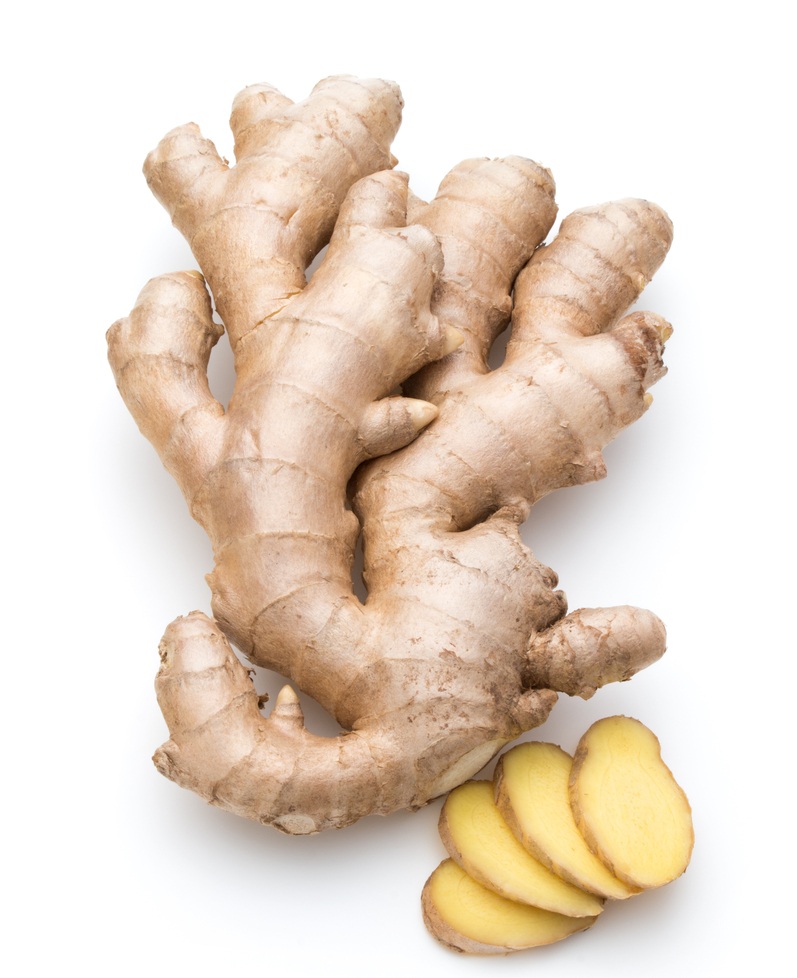
The treatment plan that ginger MRL failed to pass
You received an email from BCP saying that your batch of Chinese ginger failed the pesticide residue test. This kind of thing is not uncommon in EU ginger imports, but how to deal with it and how much loss can be controlled depends on the decisions you make in the next few hours.
1.First read clearly what is written in the bulletin. Taking two batches of Chinese ginger in June 2025 as an example, the German batch notification number is 2025.4515, and clothianidin was detected at 0.032 ± 0.016 mg/kg, and the EU 0.01 mg/kg. The product has not yet entered the market, and BCP directly issued a ban on trade-sales ban. For the batch in Belgium two days later, the notification number was 2025.4577, and 0.38 mg/kg of clothianidin was detected, which was 38 times that. The goods have been distributed to France. The treatment measures are to notify the authorities and strengthen inspections. Also exceeding the standard, the German goods stopped at the border, the Belgian batch had to be recalled, downstream customers had to be notified, and subsequent imports would be stared at.
That's why the first step is to confirm where the goods are. It is still in BCP and has not been released. You have several ways to choose from: re-inspection, return, and destruction. The cost is mainly in the batch itself. Once it has entered the market, things are much more complicated, including recall costs, customer relations, and follow-up supervision by competent authorities. The later the processing, the higher the cost.
2.After figuring out the status of the goods, the next step is to judge why this batch of goods exceeded the standard.
Clothianidin is used a lot in ginger cultivation in China, but the EU's clothianidin for ginger is 0.01 mg/kg. The German batch detected 0.032, and the Belgian batch detected 0.38, a difference of more than ten times, indicating that the planting management of the two batches may be completely different, or the inspection on the supplier's side has not been checked at all.
What you have to do is to ask the supplier to pull out the planting records and see when, how and how much clothianidin was last used. If records are missing, or if the application time is too close to harvest, the problem lies at the source. The pesticide residues of ginger are directly linked to the safety interval before harvesting. If the interval is not enough, the residues will inevitably exceed the standard.
There is also a more common problem: whether suppliers do test against EU standards before shipping. Many Chinese suppliers use domestic standards to judge whether they are qualified, but the EU standards are often much stricter. Thianidin may be qualified in China, but it will exceed the standard in the EU. If the test report given by the supplier does not include clothianidin at all, or the testing agency does not have the qualifications recognized by the European Union, the report itself is unreliable.
3.After processing the batch in front of you, the next step is to block the hole in the procurement process.
It must be clearly written in the contract: each batch of goods must be tested in accordance with the EU MRL standard before shipment, and the testing items cover clothianidin, chlorpyrifos, imidacloprid and other varieties that the EU is closely watching. The test report must be produced by a qualified third party, and the test method must meet the requirements of the European Union. Bring the report over before shipping, arrange for someone to check the measured value, and don't wait for the goods to arrive at BCP to read it-at that time, problems were found, and there were very few options to choose from.
For suppliers who have cooperated for a long time, they can be asked to provide the pesticide use account of the planting base to see clearly what medicines they usually use and how the interval is managed. Suppliers with good planting management are usually more stable in pesticide residue control. For new suppliers or those who have had problems before, do a pre-inspection before shipment, and sampling from the place of origin or a third-party agency is fine. The cost of pre-inspection is not worth mentioning compared with the loss of return and destruction.
There is another change to keep an eye on in 2026. On April 22, 2026, the European Union issued Regulation (EU) No. 2026/876, which revised the maximum residues of five pesticides including acetamiprid and deltamethrin in certain products, involving spice products such as ginger. The value on the test report should be based on the latest regulations, and cannot be judged by old standards.
There are also new requirements for phytosanitary certificates. With fresh ginger exported to the EU from 15 October 2026, the additional declaration section of the phytosanitary certificate is required to confirm that the rhizome meets the plant health requirements for Ralstonia pseudosolanacearum (solanacearum). The certificate of each shipment should clearly state which of the following situations the rhizome comes from: a country recognized as free of the disease, an officially established and named epidemic-free area, or a registered production site that has been officially inspected and sampled and can be traced. Verify with the supplier before the next shipment if they are aware of this new requirement and if the statement on the certificate is worded correctly.
String these together, and you should have a list in your hand that you can follow.
After receiving the BCP notification, confirm the notification number, cargo status and excessive data as soon as possible. The goods are still in BCP, calculate how much it will cost to re-inspect, return, and destroy, and choose the one with the least loss. The goods have entered the market, start the recall and notification procedures, and report to the competent authority at the same time. Ask the supplier to hand over the planting records and the inspection report before shipment, and analyze which link exceeds the standard. Check the pesticide varieties covered by the test report and the qualifications of the testing institution. In subsequent purchases, the contract states the EU MRL testing requirements, and the data is checked before each batch is shipped. The additional statement confirming the phytosanitary certificate complies with the new requirements in October 2026.
In the final analysis, there is only one thing in the compliance of ginger exports to the EU: the testing standards must be aligned with the EU, and domestic standards cannot be used to check. The line of 0.01 mg/kg of clothianidin is placed there. If the supplier is still using the domestic standard to screen the goods, it will be a matter of time before it exceeds the standard. What importers can do is to push the compliance requirements forward, into the procurement contract, and into the testing process before shipment.